...
| Date | Time | Room | Speaker | Affiliation | Paper | ||||
|---|---|---|---|---|---|---|---|---|---|
| September 20 | 9:30 AM | 3325 Graigner Hall | Chris Ryan | Booth School, University of Chicago | |||||
| October 29 | 9:30 AM | 3560 Grainger Hall | Kostas Nikolopoulos | Bangor University | Looking for the Needle in the Haystack: | ||||
| OIM Research Workshop | |||||||||
| December 6-7 | Edieal Pinker | Yale School of Management, Yale University | TBD | December 6-7 | Atalay Atasu | Scheller College of Business, Georgia Tech | |||
| December 6-7 | Ryan Buell | Harvard Business School, Harvard University | TBD | ||||||
| December 6-7 | Jan Van Mieghem | Kellogg School, Northwestern University | TBD | ||||||
| March 15 | 9:30 AM | Beril Toktay | Scheller College of Business, Georgia Tech | TBD | |||||
| April 5 | 9:30 AM | Kumar Rajaram | Anderson School, UCLA | TBD | |||||
...
This is joint work with Tinglong Dai (Johns Hopkins University) and Rongzhu Ke (Hong Kong Baptist University).
Looking for the Needle in the Haystack: Evidence of the Superforecasting Hypothesis When Time and Samples are Limited


The success of the Good Judgmental Project in harnessing the power of superforecasting naturally leads to the question as to how one can implement that approach on a smaller scale with more limited resources as in less time and fewer participants. Small(er) corporate environments and SME-type decision structures are prime examples where the modified superforecasting approach can be used. In this research we focus on a hybrid approach of judgmental forecasting on special events where we combine training of superforecasters-to-be via the concept of a modified version of structured analogies (s-SA), a staple of judgmental forecasting in the literature. We call the resulting approach structured superforecasting and illustrate its efficacy over samples of participants from the wider public sector and the academic community. In particular, with a proper experimental design that includes a training and a control group, we apply the above methodology and compare performances. More importantly we do find evidence of the superforecasting hypothesis even when we are working with smaller samples – a few hundred experts - and when the selection of super forecasters needs to be done much faster – in less than a year
...

Prof. Ataly Atasu, Professor, Scheller College of Business, Georgia Tech
...
The main take-away from this paper is that for all the talk on the potential of the circular economy, there is a lot to be done to test and verify its broad, sweeping claims, and much of this needs an academic perspective.
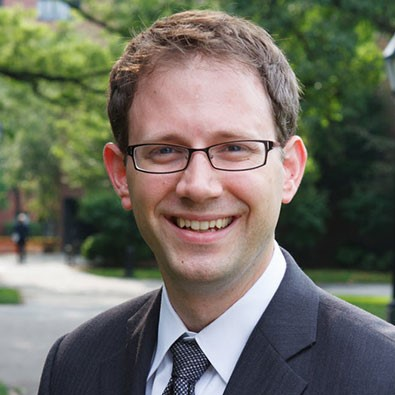 Prof. Ryan Buell, Associate Professor, Harvard Business School, Harvard University
...