...
Date | Time | Room | Speaker | Affiliation | Synopsis | Paper |
|---|---|---|---|---|---|---|
| 4:15PM to 5:30PM | Fluno Center | Nitin Mehta | Pending | Pending | |
| 8:45AM to 10:00AM | 4151 Grainger Hall | Gita Johar | Columbia Business School | Pending | Pending |
| 10:30AM to 11:45AM | 4151 Grainger Hall | Monic Sun | Questrom School of Business, Boston University | Pending | Pending |
| 12:45PM to 2:00PM | 4151 Grainger Hall | Albert Muniz | Driehaus College of Business, DePaul University | Pending | Pending |
AI Algorithms and Rising Concerns of Racial Biases: An Analysis of Airbnb’s Smart Pricing Algorithm

Nitin Mehta, Professor, Rotman School of Business, University of Toronto
Synopsis
AI algorithms have sparked concerns that they might produce outcomes that perpetuate or exacerbate existing racial biases. We examine the implementation of Airbnb’s smart-pricing algorithm and derive market implications across different ethnic groups of Airbnb hosts who adopted it. After its introduction, the revenue gap between white and black hosts further increased by 16.4% suggesting that the algorithm exacerbated existing racial biases. However, this result is unconditional on its adoption. Conditional on its adoption, the revenue gap decreased by 57.2%, which shows that it can substantially mitigate racial biases, but the challenge is to enhance its adoption among black hosts. The reason why the algorithm helped black hosts more than white hosts is because while the magnitude of the price correction by the algorithm was the same across black and white hosts, the rental-demand for black hosts is more responsive to price changes.
Combating Fake News: A Consumer Psychology Perspective
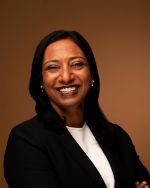 Gita Johar, Professor, Columbia Business School
Synopsis
An increasing proliferation of misinformation and “fake news” has been widely reported and documented. Reality is now under attack from advertising-optimized information architectures mediating our contemporary reality and disinformation campaigns proliferate on online forums and social media. My research program aims to answer questions regarding why we believe and share fake news and how to prevent or correct inaccurate beliefs. In a recent paper titled “Perceived Social Presence Reduces Fact-Checking” (Proceedings of the National Academy of Science 2017), we find that consumers are less likely to fact check ambiguous news headlines when they feel they are in the presence of others compared to when they are alone. We find that this reluctance to fact check is caused by reduced vigilance in group settings such as social media. In a series of follow-up research projects, I am designing interventions such as direct debunking as well as subtle flagging of news headlines and testing their impact on message scrutiny. We find mixed evidence for the efficacy of these interventions. We also find that increasing message skepticism and scrutiny can have unintended spillover consequences in terms of reduced trust in brands advertised on these social platforms. In another research project, I address the issue of fake news from a different perspective and examine sharers of fake news. Who are they, and what motivates them to share fake news? We contrast fake news sharers, fact-check sharers, sharers of news articles from general media outlets and a random sample of social media users across five dimensions--demographics, political ideology, social media usage, emotions and personality. We access these characteristics by collecting their personal information as posted on Twitter as well as the content of their tweets. Fake news sharers differ from the other groups on multiple characteristics, but they also show similarities to fact check users on their emotional profile. Our findings can help social platforms to screen, prioritize and scrutinize messages posted by potential fake news sharers before false messages are widely disseminated. Taken together, this research program aims to guide policy discussions on how to combat the spread of fake news.
A Model of Smart Technologies
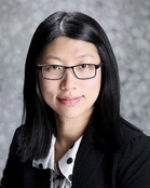 Monica Sun, Associate Professor, Questrom School of Business, Boston University
Pending Synopsis