
...
- Click the plus sign button or type a forward slash and search for "aside".
- Select the aside callout block.
- Select which type of aside block you need. When you change the type of aside, different fields will pop up, so be sure to choose the type first, before you fill in the fields.
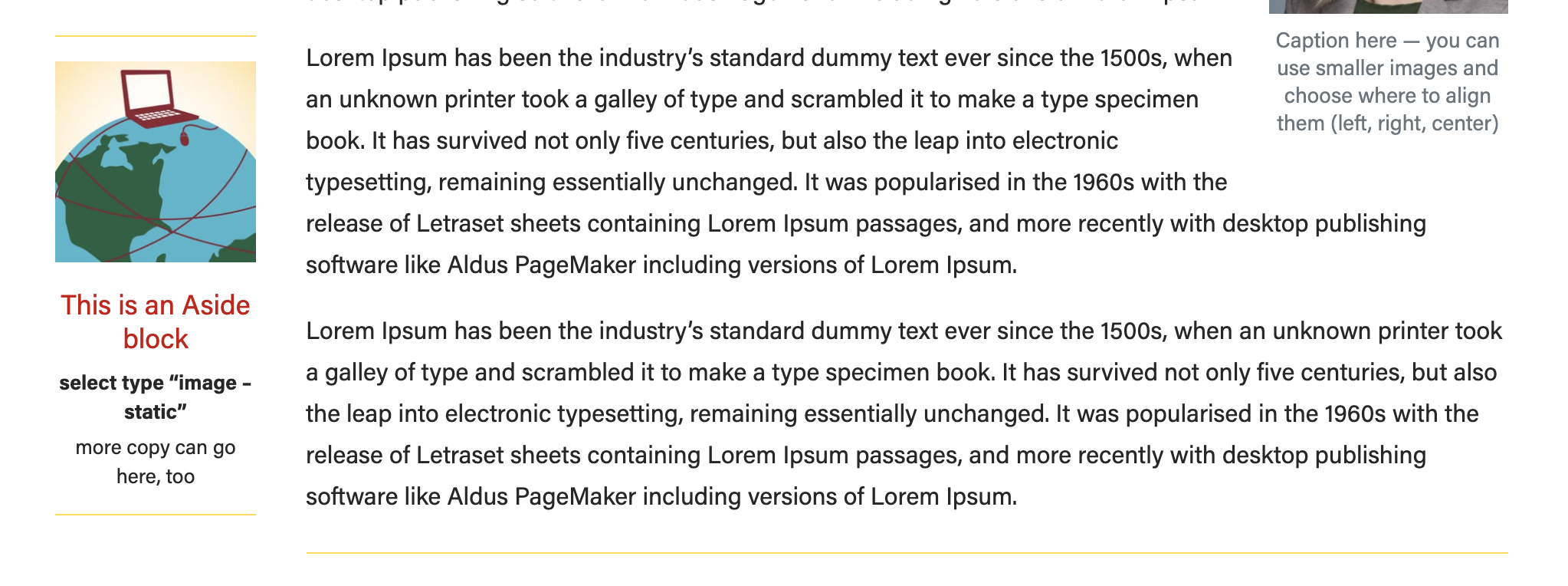
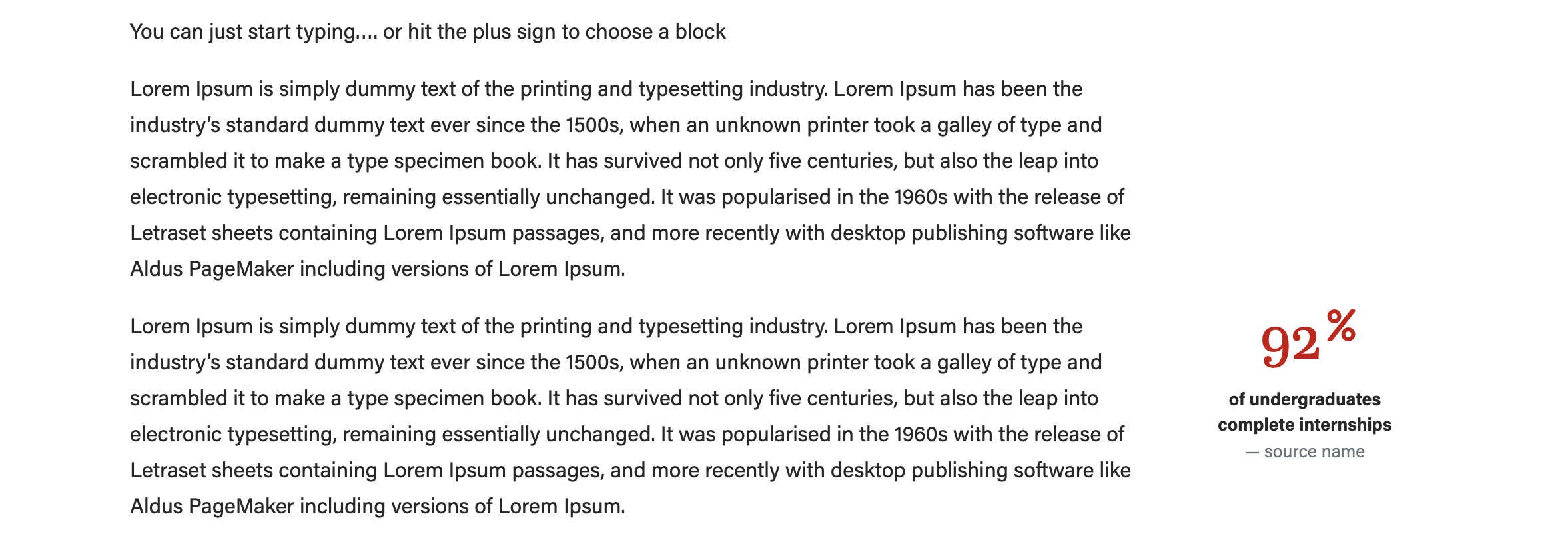
- Image - statistic (use an icon or no image)
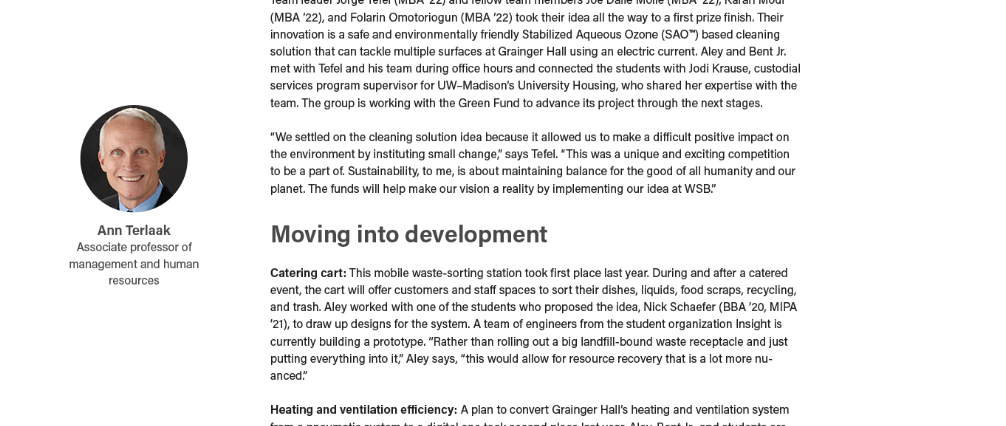
- Image - person (use a square headshot)
- Ranking (no image can be added)
- Image - statistic (use an icon or no image)
- Add the image (if applicable) and copythe text. We recommend only using a square image for this block. The "image - person" layout will crop your image to a circle for you.
Be sure to preview your content to make sure the aside is not cutting into content or overlapping with footer content on the page.
- Click Preview > Preview in a new tab to check this. Resize your browser to as skinny as possible to mimic the view on a mobile device. Or you can publish the changes and pull up the post on your phone to see how it looks.
- If the aside is overlapping other content, or splitting up content, or making the article difficult to read, move the aside block up higher or down the page and preview again to make sure the issue is resolved.
- Guidelines:
- Aside blocks are meant to be used with a very small amount of copy. (~100 characters or fewer)
- Asides should be used sparingly in a single article.
- Use 3 asides max in one article.
- If using more than one aside, they should be separated by at least one paragraph.
- Asides wrap with the article content as the screen size is reduced. This can create disjointed lines of copy and can be confusing and create a lot of clutter on the page.
- The aside block cannot be the last item in your post (this will push it down to overlap the footer content)
- Don't place an aside directly above an H2 heading. This will awkwardly split up the heading on mobile devices.
Meta Fields
These optional fields can be found below your post content. If you don't see subtitle, author override, etc. you need to click the arrow next to Meta to expand this section.
...
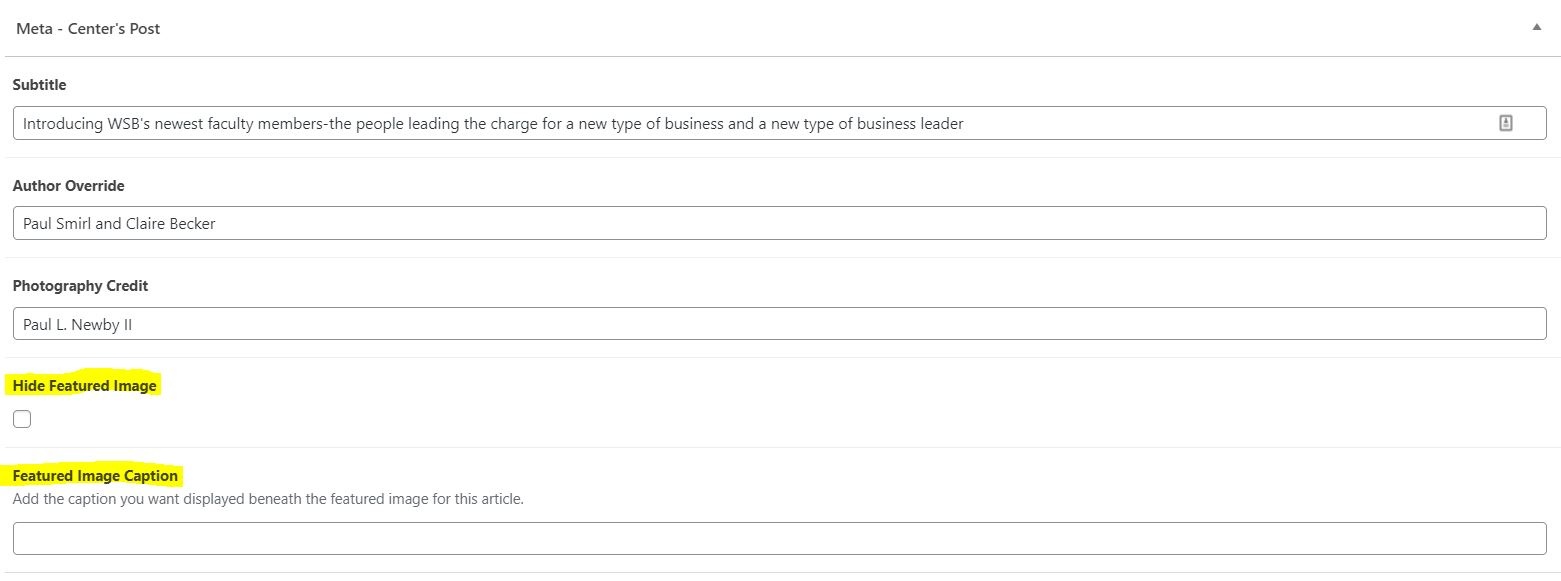
Subtitle
- The subtitle will appear below the post title and above the author and featured image.
Author override
- Author defaults to your name (the person making the post). If you want it to be someone else, say your department or center, put that name here.
Photography credit
- Add photographer's name here if you want to provide a photography credit for all images in your post.
Hide featured image
- Check the box if you want to hide the featured image on the actual blog post.
- If unchecked, the featured image will appear at the top of your blog post and in the listing of blog posts.
- You can add a caption for a featured image under the Featured Image Caption field.
- If checked, the featured image will only be displayed in the listing of multiple blog posts.
- If unchecked, the featured image will appear at the top of your blog post and in the listing of blog posts.
- Check the box if you want to hide the featured image on the actual blog post.
...